How to pass the Australian citizenship test: what it includes and how to prepare

The citizenship test is the part of becoming Australian that most people worry about, and it's more manageable than its reputation. Here's what it includes, how it's marked, what happens on the day, and how to prepare so you pass the first time.
What is the Australian citizenship test?
The citizenship test is part of applying for Australian citizenship by conferral, the path most permanent residents take. It checks that you understand Australia's democratic beliefs, the responsibilities and privileges of citizenship, and Australian values, and that you have a basic knowledge of English, because the test itself is in English.
Most applicants aged 18 to 59 are invited to sit the test at a citizenship appointment. Applicants younger or older than that usually attend an interview instead. The cost of the test is included in your citizenship application fee.

Test format at a glance
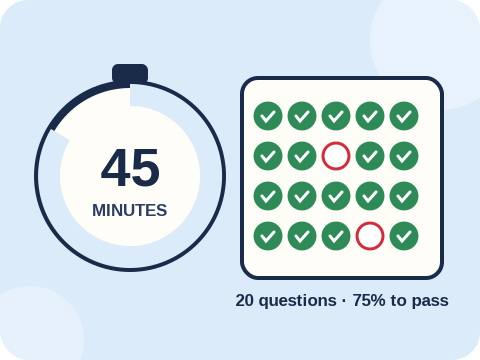
The test is taken on a computer. You answer 20 multiple-choice questions in 45 minutes, which is more than two minutes per question. To pass you need at least 15 correct answers, and all five of the questions about Australian values must be among them.
What does the test include?
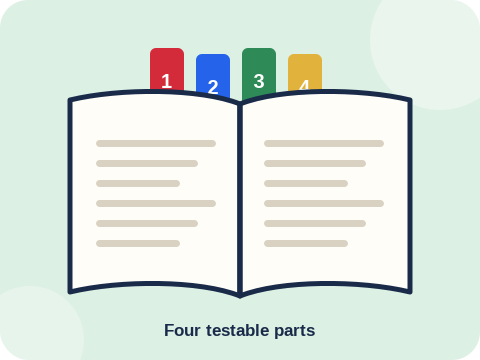
Every question is based on Australian Citizenship: Our Common Bond, the resource booklet published by the Department of Home Affairs. You can read it free on the Home Affairs website. Only its testable sections are examined, and they're grouped into four parts:
Part 1: Australia and Its People
Where Australia came from and who lives here.
- Aboriginal and Torres Strait Islander Peoples
- European Settlement and Federation
- A Nation of Migrants
- States and Territories
- National Symbols and Traditions
- Important National Days
Part 2: Australia's Democratic Beliefs, Rights and Liberties
The beliefs, freedoms and duties that come with being a citizen.
- Our Democratic Beliefs
- Our Freedoms
- Equality Before the Law
- Responsibilities of Citizenship
- Privileges of Citizenship
Part 3: Government and the Law in Australia
How Australia is governed and how its laws are made and enforced.
- Voting and Having Your Say
- Federation and the Australian Constitution
- The Three Powers of Government
- The Head of State and the Governor-General
- Parliament: The House of Representatives and the Senate
- The Three Levels of Government
- Political Parties and How Laws Are Made
- Courts, Judges and Juries
- Police and the Law
- Criminal and Traffic Offences
Part 4: Australian Values
The values every citizen is expected to share. These are the questions you must get right.
- The Rule of Law and Parliamentary Democracy
- Freedom of Speech and Association
- Freedom of Religion
- Equality Under the Law
- Mutual Respect and Tolerance
- Community, Contribution and Loyalty
The booklet also has non-testable sections, such as stories and background reading. They're worth a look, but you won't be asked about them.
The Australian values questions
Five of the 20 questions test your understanding of Australian values, and this is the rule that catches people out: you must answer all five correctly. Nineteen out of 20 is still a fail if the one you missed was a values question.
The values covered include respect for the freedom and dignity of the individual, freedom of speech, religion and association, commitment to the rule of law and parliamentary democracy, equality of men and women, equality of opportunity (a "fair go"), mutual respect and tolerance, and the spirit of mateship and contributing to the community. Learn them well enough to explain each one in your own words, and to spot an answer that goes against them.
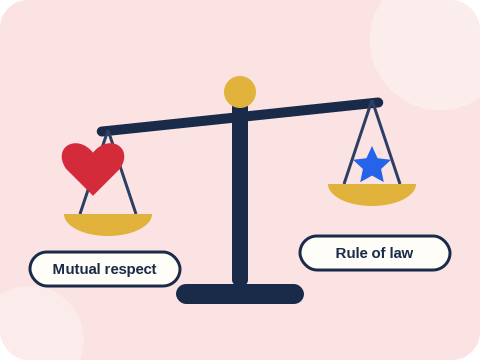
Our guide to Australian values goes through each one in detail.
Example questions
These are practice questions written in the style of the test. The real questions are confidential and aren't published anywhere.

- Which of these reflects Australian values?
Support for parliamentary democracy and the rule of law · Government control of religious practice · Restriction of freedom of speech · Unequal treatment under the lawAnswer
Support for parliamentary democracy and the rule of law. Australia strongly values parliamentary democracy and the rule of law, where everyone is equal before the law and laws are made by elected representatives.
- What are the two houses of the Australian Parliament?
The House of Commons and the House of Lords · The Senate and the House of Representatives · The Upper House and the Lower House only · The Congress and the AssemblyAnswer
The Senate and the House of Representatives. The Australian Parliament has two houses: the Senate (upper house) and the House of Representatives (lower house).
- Who must vote in federal and state elections?
Only Australian-born citizens · All citizens aged 18 and over · Only citizens who choose to · Only male citizensAnswer
All citizens aged 18 and over. All Australian citizens aged 18 years or over must enroll to vote and vote in federal and state or territory elections. Voting is compulsory.
- What is Australia's national flower?
The waratah · The golden wattle · The eucalyptus · The kangaroo pawAnswer
The golden wattle. The golden wattle is Australia's national floral emblem. It blooms in late winter and spring with brilliant golden flowers.
- What is the highest court in Australia?
The Federal Court · The Supreme Court · The High Court of Australia · The Court of AppealAnswer
The High Court of Australia. The High Court of Australia is the highest court in Australia. It interprets and applies the law of Australia.
Home Affairs also publishes its own official sample test. Do it at least once.
Is the citizenship test hard?
Most people who prepare properly pass. The questions aren't designed to trick you, but a few things make them harder than they look:
- The values rule. One slip on a values question means failing, however well you do on the rest.
- Plausible wrong answers. The wrong options often sound reasonable, for example naming the Governor-General when the question asks about the head of state.
- Specific facts. Numbers and names matter: six states and two mainland territories, three levels of government, two houses of Parliament.
- Reading in English. If English isn't your first language, careful reading under time pressure is a skill in itself.

How to pass the Australian citizenship test: 8 tips
Everyone starts from a different place, but the people who pass first time tend to do the same few things. Here they are.
- Study from the source. Our Common Bond is the only material the questions come from. Summaries and videos can help, but read the booklet itself.
- Stick to the testable sections. Spend your time on the four testable parts, not the extra reading.
- Master the values first. They're the only questions you can't afford to miss. Learn them before anything else and revise them last.
- Make a list of names and numbers. National days, the colours and symbols, how many states and territories, the levels of government, what each house of Parliament does.
- Study a little every day. Twenty minutes a day for a month beats a weekend of cramming. Spaced review, where you revisit what you're about to forget, makes it stick.
- Practise under test conditions. Take timed, 20-question practice tests and treat them like the real thing. Aim to pass comfortably, with every values question right, several times in a row.
- Read every option before you answer. Rule out the answers that are clearly wrong, then choose between what's left. If a question asks what Australians should do, the answer that respects the law and other people is almost always right.
- If English is your second language, use both. Read a section in your own language until you understand it, then read it again in English so you know the words the test will use.
A four-week study plan
Four weeks is enough for most people if you study a little every day. Here's one way to split it.
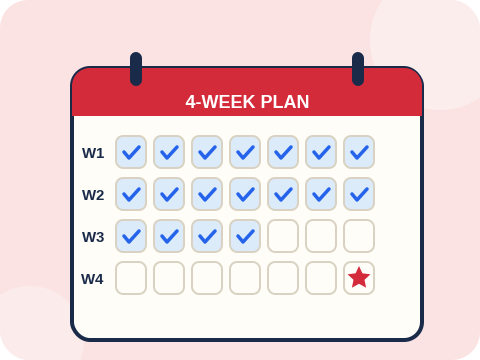
| Week | Focus | Goal |
|---|---|---|
| 1 | Part 1 (Australia and its people) and Part 2 (democratic beliefs, rights and liberties) | Read each section once, then make your list of names, dates and numbers. |
| 2 | Part 3 (government and the law) | Understand how Parliament, the courts and the three levels of government fit together. |
| 3 | Part 4 (Australian values), then revise Parts 1 to 3 | Explain every value in your own words. Start answering practice questions by topic. |
| 4 | Full practice tests | Timed 20-question tests every few days. Pass comfortably, with all values questions right, before your appointment. |
Already short on time? Do weeks 3 and 4 first. Values and practice tests give you the most for the least time.
What happens on the day
You'll be given a citizenship appointment. Bring your original photo ID, such as an Australian driver licence, a passport or an Australian proof-of-age card. Certified copies and photos of your ID aren't accepted, and without it your appointment will be moved to a later date.
At the appointment an officer confirms your identity and talks through your application, then you sit the test on a computer. Check your appointment letter and the Home Affairs test page for anything else you need to bring.

If you don't pass
Not passing doesn't end your application. Home Affairs will explain your options, including sitting the test again. Look at which questions you found hardest, go back to those sections of the handbook, and keep taking practice tests until you're passing comfortably. Check the department's website for the current rules on re-sitting the test.
Frequently asked questions
How many questions are on the Australian citizenship test?
There are 20 multiple-choice questions, answered on a computer, and you have 45 minutes.
What is the pass mark for the Australian citizenship test?
You need 75%, which is 15 out of 20, and you must also answer all five questions about Australian values correctly. A high score with one values question wrong is not a pass.
What should I study for the citizenship test?
Study the testable sections of Our Common Bond, the resource published by the Department of Home Affairs. Every test question is based on it.
Can I take the citizenship test in another language?
No. The test is in English. You can use translations of Our Common Bond to understand the material while you study, but you answer the test in English.
Who has to sit the Australian citizenship test?
Most people applying for citizenship by conferral who are aged 18 to 59 are invited to sit the test. Younger and older applicants usually attend an interview instead.
Are the real citizenship test questions published?
No. The real questions are confidential. Home Affairs publishes a sample practice test, and other practice questions are written to match the handbook and the format.
Where Oz Citizenship Test can help
If you'd like to do all of this on your phone, that's what we built Oz Citizenship Test for. It has the whole Our Common Bond handbook free to read, in English and 12 other languages side by side. One purchase unlocks timed practice tests that follow the real format and pass rules, a full mock test, and flashcards with spaced review. It all works offline. Start with our free 20-question practice test on this site.
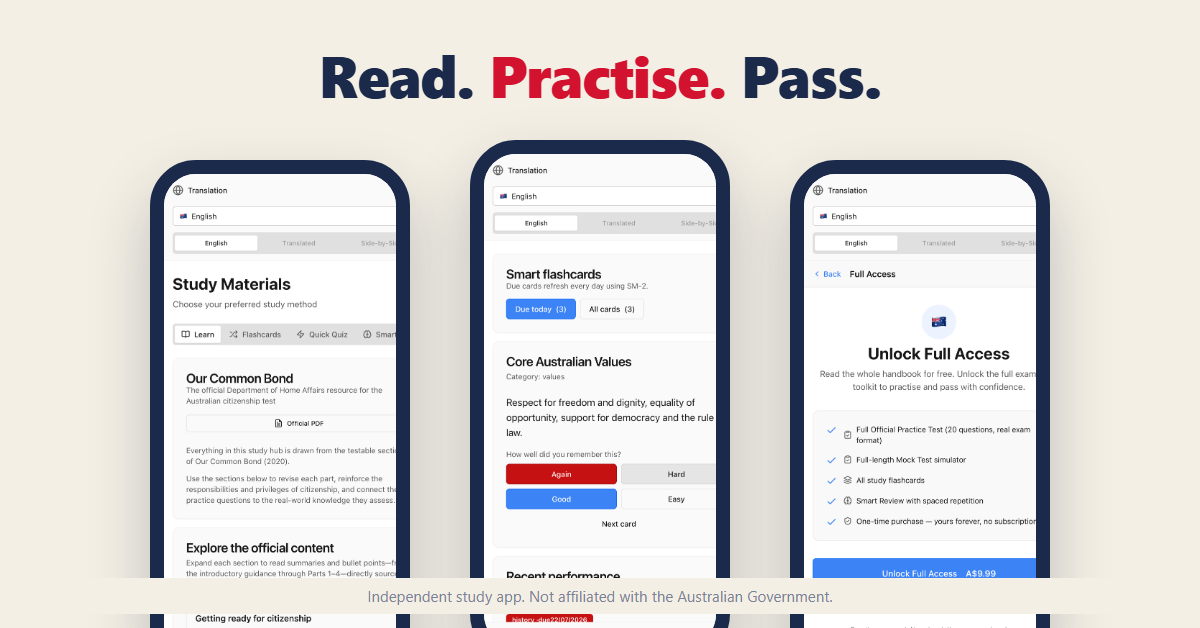

Prepare with Oz Citizenship Test
Read the whole Our Common Bond handbook free, in English and 12 other languages. Unlock the practice tests and flashcards with one purchase.